

Research groups
Find out more about our research groups below. Click here for details of our honorary group leader pages.

Our research is aimed at uncovering the genetic and genomic basis of morphological complexity in animals, from both developmental and evolutionary perspectives.


Atkin Group studies plant metabolic responses to environmental gradients, including how leaf respiration varies within and among biomes across the globe.

We study how physiological adaptations and responses to environmental stresses affect the structure and functioning of plant communities.

We study the genetic basis of Climate Adaptation in foundation plant species, using state of the art Genomic and Phenomic techniques
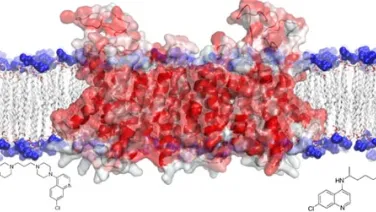
The Brock lab loves membrane proteins; looking at them in atomic detail, discovering new drug molecules, and engineering them to create new biosensors. Join us!

Broer group studies the role of amino acid transport in the onset of insulin resistance and the regulation of carbohydrate metabolism.

We use phylogenetic comparative methods to investigate the characteristics of lineages that influence the pattern and rate of genome evolution.

We work on engineering strategies to increase crop tolerance to salinity and drought, and to advance water filtration technology.

We are interested in big-picture questions about biodiversity. Why are there so many species in the tropics? How have some places become biodiversity hotspots?

The Casarotto Group seeks to carry out research that explores how the structural properties of biological molecules can impact on the biological process.

We aim to unravel molecular and biochemical mechanisms that enable plant cells to adapt to challenging environmental conditions

Corry group's research examines the structure and function of membrane proteins.

Our group studies plasmodesmata to answer important plant science questions related to development, cellular transport, root biology, signalling and evolution.
Sustainable food security is of utmost importance to the future of the planet.

We are working on a very simple and inexpensive cancer immunotherapy treatment, and a bioinformatics study looking for novel proteins in different genomes.

The Farine Group aims to understand how individuals navigate their physical and social landscapes and how, in turn, individual decisions impact physiology and fitness. Notably, we have developed novel theory to predict how optimal decisions at the individual level drive conflict among group members, discovered how groups resolve conflicting preferences among members, uncovered complex multilevel societies in birds, and tested how individual differences in these patterns and processes shape survival and reproduction.

Our research includes: photosynthesis and growth with N2 and water use of plants; stomatal physiology; isotopic composition of plants & global change science.

Our research focuses on the identification of enhanced photosynthetic properties in crop and model plant germplasm, and improving C4 photosynthesis.

We aim to identify new potential targets for antibacterial agents, using structural biology, biochemistry and bacteriology methods.

Research in the Head Group focuses on the evolution, ecology and physiology of sexual reproduction.

Our research interests lie at the interface between biology, chemistry and physics

What do we do? We are interested in whole organism evolutionary biology, especially the evolution of behavioural and morphological reproductive traits.

My primary research interest is the study and evaluation of evolutionary processes and we work mostly on reptile and frog systems.


Our work is motivated by the desire to understand molecular evolution, from the origin of mutations in individuals to their fixation in evolving lineages.

We study many aspects of evolutionary and behavioural ecology in birds, mainly by using field experiments and observations to test evolutionary theory.

We study membrane transport processes in the Plasmodium parasites that cause malaria.

We study how autotransporters are assembled into bacterial outer membranes, and how they function to mediate infection and disease once they get there.

Our main research interest is in fungal-plant-interactions, both applied and pure research, on a range of important pathogens.

We have broad interests in behavioural ecology, particularly acoustic communication and breeding biology in birds.

The Maier Group focusses on the identification of molecules involved in malaria pathogenesis and transmission.

Our research is aimed at understanding how diet and nutrition influence wildlife physiology, behaviour, and habitat quality.
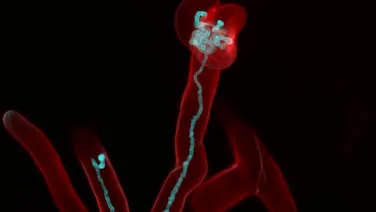
We are interested in the molecular mechanisms controlling nodule development in legumes, and how this is linked to other aspects of root architecture.

The Melonek Group studies the genetic and molecular basis of cytoplasmic male sterility and fertility restoration in plants.

Our research actually spans may study systems and research questions. But the evolution of honey bee parasites and diseases and is a major focus.

The principal interest of the lab is gene silencing mediated by microRNAs, with a focus on microRNAs that control plant disease resistance.

Our research focuses on evolutionary biogeography; biodiversity discovery and conservation; biogeography speciation; and biological responses to climate change.

We are interested in phenotypic plasticity - the range of forms a given genetic individual can exhibit under different environments.

Our research explores how early developmental experiences impact physiology and metabolic function.

Our research spans reproductive ecology, genetics, phylogeny, biochemistry and chemical ecology.

The overarching theme of our research is to determine the controls and regulators of communication between the chloroplast and nucleus.

Rathjen group focuses on all aspects of plant immunity, characterising the fascinating interplay between host and pathogen.

The Saliba Group is investigating vitamin utilisation pathways in the red blood cell stage of the human malaria parasite Plasmodium falciparum.

Our team focuses on questions around plant biosecurity in Australia by studying the interaction between plants and their fungal pathogen.

The Sequeira Lab at the Australian National University is a leading research group advancing global marine conservation through science, innovation, and collaboration

The Solomon group focuses on microbial pathogens of wheat and other important crops that threaten food security and stability.

The Spry group focuses on validating new drug targets and identifying new drugs to combat key pathogenic microbes responsible for human disease.

We study aspects of the evolutionary process, including mutational events, the genetic basis of fitness-related traits, and genetic variation.

We are interested in understanding the biology of chytrid fungus and how it infects frogs with the aim of developing novel interventions.

We study the basic biology of parasites, with the hope that such knowledge can be used in developing new treatment options against these formidable foes.

One of the most pressing concerns in biology is whether we can predict how plants and ecosystems will respond to climate change.

We focus on the development and use of synthetic tools to scrutinize the biology of the most abundant protein, the photosynthetic CO2-fixing enzyme Rubisco.

We aim to understand the molecular basis of the interactions between plant hosts and the microorganisms, particularly fungi, that colonise them.