

Evolutionary genetics and genomics
About
New methods in genetics and genomics have allowed a rapid expansion of research into the basis of variations in phenotype, development and the epigenetic variations induced by diet and other lifetime experiences. Genetics research in the Research School of Biology spans plants and animals and model and non-model organisms. We have a strong reputation in epigenetics, chromosome evolution, developmental biology and in plant-animal interactions and are well equipped in large scale sequencing facilities.
Groups

Our research is aimed at uncovering the genetic and genomic basis of morphological complexity in animals, from both developmental and evolutionary perspectives.

We use molecular tools to investigate many aspects of coral biology including comparative genomics, development, stress responses and calcification.

We study the genetic basis of Climate Adaptation in foundation plant species, using state of the art Genomic and Phenomic techniques

We use phylogenetic comparative methods to investigate the characteristics of lineages that influence the pattern and rate of genome evolution.

We are interested in big-picture questions about biodiversity. Why are there so many species in the tropics? How have some places become biodiversity hotspots?

We are working on a very simple and inexpensive cancer immunotherapy treatment, and a bioinformatics study looking for novel proteins in different genomes.

The aim of our research is to understand the ecology and evolution of interactions between plants and animals in the Australian biota.

Research in the Head Group focuses on the evolution, ecology and physiology of sexual reproduction.

What do we do? We are interested in whole organism evolutionary biology, especially the evolution of behavioural and morphological reproductive traits.

My primary research interest is the study and evaluation of evolutionary processes and we work mostly on reptile and frog systems.

Our work is motivated by the desire to understand molecular evolution, from the origin of mutations in individuals to their fixation in evolving lineages.

We study many aspects of evolutionary and behavioural ecology in birds, mainly by using field experiments and observations to test evolutionary theory.

Our main research interest is in fungal-plant-interactions, both applied and pure research, on a range of important pathogens.

We are investigating diverse epigenetic mechanisms in the context of behaviour and developmental plasticity, mainly using the honey bee model.

Our research actually spans may study systems and research questions. But the evolution of honey bee parasites and diseases and is a major focus.

Our research focuses on evolutionary biogeography; biodiversity discovery and conservation; biogeography speciation; and biological responses to climate change.

We are interested in phenotypic plasticity - the range of forms a given genetic individual can exhibit under different environments.

Our research explores how early developmental experiences impact physiology and metabolic function.

Our research spans reproductive ecology, genetics, phylogeny, biochemistry and chemical ecology.

The overarching theme of our research is to determine the controls and regulators of communication between the chloroplast and nucleus.

The Price lab is presently focusing on the molecular biology and physiology of photosynthesis in cyanobacteria (blue-green photosynthetic bacteria) and plants

We study the mechanisms behind the proximal processes of evolution – those that lead to population differentiation, divergence and ultimately speciation.

Our team focuses on questions around plant biosecurity in Australia by studying the interaction between plants and their fungal pathogen.

The Solomon group focuses on microbial pathogens of wheat and other important crops that threaten food security and stability.

We study aspects of the evolutionary process, including mutational events, the genetic basis of fitness-related traits, and genetic variation.

We study the basic biology of parasites, with the hope that such knowledge can be used in developing new treatment options against these formidable foes.
Projects
News

We may be in the middle of an insect mass extinction. The once abundant Rocky Mountain locust was last seen in 1902. Under the Mikheyev Group, Peiyu Yuan used data from a related extant locust species and comparative genomics to identify artifacts in museum data of the Rocky Mountain locust.

The amazing diversity we see in Australian animal developed early and has slowed considerably in the last 10 million years, say Ian Brennan and Scott Keogh from the ANU Research School of Biology.

Benjamin Schwessinger talks about research, teaching and equity
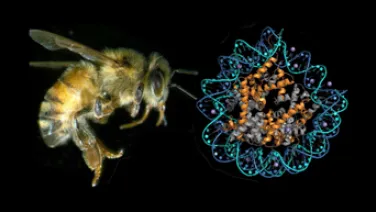
They say leaders are born not made, but it seems the opposite is true for queen bees, according to a new study by researchers from The Australian National University (ANU) and Queen Mary University of London.

Sasha Mikheyev's lab uses technological advances, largely in sequencing, to understand how organisms respond to biotic changes in their environments.

Within two days of Josh Penalba submitting his PhD, the Biology graduate started working in a lab at the Ludwig Maximilian University of Munich.