
News & events
News

Stefan Bröer is looking for the right molecule for a biological target, that could be developed into a drug to treat diabetes. Now ANU has its own library of compounds, available to biological and medical researchers, managed by the Research School of Chemistry.

Aude Fahrer's work aims to activate the immune cells responsible for attacking cancer, in a simple, low cost way.

Alex Maier has been elected as a Fellow of the Australian Society for Parasitology.
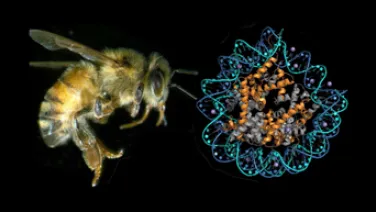
They say leaders are born not made, but it seems the opposite is true for queen bees, according to a new study by researchers from The Australian National University (ANU) and Queen Mary University of London.
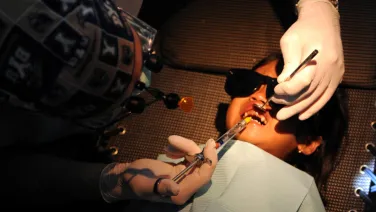
New research from The Australian National University (ANU) has drilled down to the molecular level to find similarities across six pharmaceutical drugs used in pain relief, dentist anaesthetic, and treatment of epilepsy, in a bid to find a way to reduce unwanted side-effects.

Linden Muellner-Wong has won a 2017 RSB Director's Prize in Honours.
Events

Malaria remains the deadliest parasitic disease in the world despite years of sustained effort, new drug development, and a greater understanding of the causative parasite, Plasmodium, and its interactions with its host.