
News & events
News

Extremely short, or tiny, fragments of RNA – working copies of our genetic code – play a critical role in keeping the immune system in check, preventing inflammation and the onset of autoimmune disease, according to an international team of researchers led by scientists from The Hudson Institute of Medical Research in collaboration with The Australian National University (ANU).

The discovery of a new critical enzyme could help engineer climate resilient crops capable of sucking far more carbon dioxide from the atmosphere in a much more efficient way.

Professor Alexander Maier wants us to change our mind about parasites.

Meet the PhD researcher exploring how bacterial proteins could hold the key to reducing our reliance on fossil fuels.

Researchers have discovered why malaria parasites are vulnerable to some drug therapies but resistant to others, offering scientists another piece of the puzzle in the global fight against the disease.

A low-cost, non-toxic cancer treatment has been developed by researchers at The Australian National University (ANU). The treatment uses dead bacteria to help kick-start the immune system and shrink cancer.
Events

In this seminar, I will present our recent work using high-resolution structural biology approaches to investigate the architecture and organization of complex microbial biofilms.

Sphingolipids constitute an important class of lipids found in all eukaryotes. In addition to their essential structural roles in cellular membranes, sphingolipids act as signalling molecules and regulate a wide range of cellular processes.
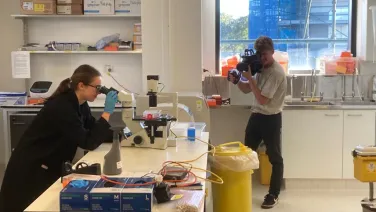
Toxoplasma gondii belongs to the apicomplexan phylum, a group of medically and economically important parasites worldwide. T. gondii causes toxoplasmosis which can result in severe disease in immunocompromised people, neonates, and livestock.
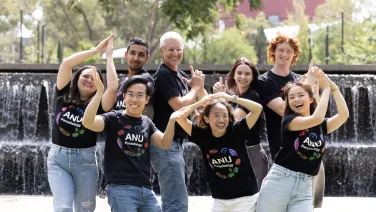
Malaria is a mosquito-borne infectious disease, with its most severe form caused by the protozoan parasite Plasmodium falciparum. The rapid emergence and spread of drug‑resistant parasites demand new therapeutic strategies.

My PhD work defines the sources and mechanisms of cholesterol uptake in P. falciparum-infected RBCs and demonstrates how this pathway can be exploited to improve antimalarial drug delivery and therapeutic index.

In this talk, I will show how combining phylogenetic inference, protein structure prediction, and ancestral sequence reconstruction opens new ways to investigate how protein functions originate and diversify across the tree of life.