
News & events
News

Stefan Bröer is looking for the right molecule for a biological target, that could be developed into a drug to treat diabetes. Now ANU has its own library of compounds, available to biological and medical researchers, managed by the Research School of Chemistry.

Aude Fahrer's work aims to activate the immune cells responsible for attacking cancer, in a simple, low cost way.

Alex Maier has been elected as a Fellow of the Australian Society for Parasitology.
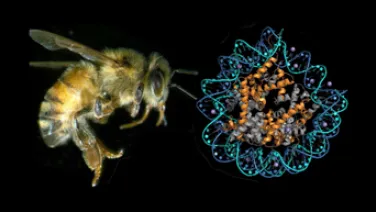
They say leaders are born not made, but it seems the opposite is true for queen bees, according to a new study by researchers from The Australian National University (ANU) and Queen Mary University of London.

New research from The Australian National University (ANU) has drilled down to the molecular level to find similarities across six pharmaceutical drugs used in pain relief, dentist anaesthetic, and treatment of epilepsy, in a bid to find a way to reduce unwanted side-effects.

Linden Muellner-Wong has won a 2017 RSB Director's Prize in Honours.
Events

Autotransporters are a large family of bacterial secreted and/or outer membrane proteins that play key roles in the pathogenesis of many infectious diseases.

Mutations in the gene encoding the human ATP-binding Cassette (ABC) transporter ABCA4 are implicated in several visual disorders including Stargardt’s disease, an early onset macular dystrophy.

P-glycoprotein is an ATP Binding Cassette (ABC) transporter, expressed at numerous sanctuary sites protecting the body against xenobiotics. Overexpression of P-glycoprotein in cancer cells is associated with a multidrug resistance phenotype.

Immunotherapy is a re-emerging alternative to other invasive and debilitating cancer treatments. Monoclonal antibodies that disrupt immune checkpoint molecules, such as PD1 or CTLA4, continually demonstrate great promise.

Membrane transport proteins, also known as transporters, are crucial for the maintenance of cell physiology by facilitating the movement of ions, nutrients, metabolites, and waste across cell membranes.