
News & events
News

Stefan Bröer is looking for the right molecule for a biological target, that could be developed into a drug to treat diabetes. Now ANU has its own library of compounds, available to biological and medical researchers, managed by the Research School of Chemistry.

Aude Fahrer's work aims to activate the immune cells responsible for attacking cancer, in a simple, low cost way.

Alex Maier has been elected as a Fellow of the Australian Society for Parasitology.
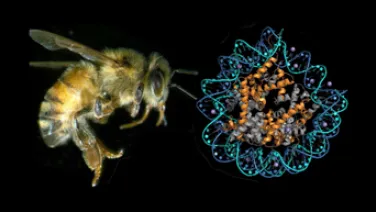
They say leaders are born not made, but it seems the opposite is true for queen bees, according to a new study by researchers from The Australian National University (ANU) and Queen Mary University of London.
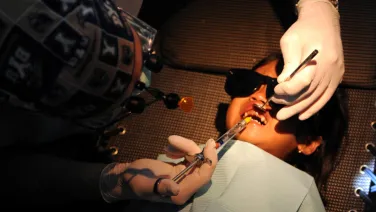
New research from The Australian National University (ANU) has drilled down to the molecular level to find similarities across six pharmaceutical drugs used in pain relief, dentist anaesthetic, and treatment of epilepsy, in a bid to find a way to reduce unwanted side-effects.

Linden Muellner-Wong has won a 2017 RSB Director's Prize in Honours.
Events

Di has established the first single-cell atlas for calcareous sponges using an endemic species of Australia, Sycon capricorn. His study reinforces the utility of the Sycon sponge as a model to explore a range of biological processes, such as wound healing.

In this seminar, Dr Hayley Bugeja will tell the story of the development of interactive workshops in a large second year genetics subject, which were iteratively designed over several years (pre and post pandemic).

Ion channels are the molecular gatekeepers of our cells, activating in response to diverse stimuli to facilitate the movement of ions and solutes across biological membranes.

Malaria is a significant disease in Africa, certain countries in Asia, and Central and South America. In 2022, malaria infected approximately 233 million people and caused 608,000 death.

A lipid bilayer is a vital component of the cell. It is selectively permeable, allowing only ions and organic molecules to pass through. Ions and solutes are transported by membrane transporters. Dysfunction of such proteins can lead to physiological disorders.

Discover the capabilities of the new Precision Fermentation Facility that has been established at RSB, including an overview of the equipment, its capabilities and potential applications.