
News & events
News
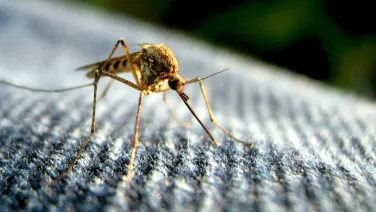
Researchers from The Australian National University (ANU) have exposed a fatal flaw in the deadly parasite that causes malaria - one of the world's biggest killers.

Amber Condell likes stories - both hearing them and telling them. That’s why she likes studying genetics.

A study led by researchers at ANU could lead to new treatments for combating drug-resistant malaria, as well as boost existing drugs.

In fiction and popular culture, parasitic characters appear as a metaphor for the threat and spread of disease.

My group focuses on understanding the function of integral membrane transporters and receptors from a structural perspective.

Professor Geoff McFadden has been awarded the Ralph Slatyer Medal for research in understanding the malaria parasite.
Events

Throughout my PhD, I determined the transport mechanisms of two proteins that we show break the standard channel / transporter definitions and instead function as anion “chansporters” - proteins that exist somewhere on the spectrum between transporters and channels.

BSB Seminar Series: Structural Basis of Heteromeric Amino Acid Transporters for Targeted Drug Design
Heteromeric amino acid transporters (HATs) play essential roles in the transport of amino acids, thyroid hormones, and various amino acid–like drugs. Mutations in HATs are associated with several inherited disorders, including cystinuria, lysinuric protein intolerance, and autism spectrum disorders.

Autotransporters (ATs) are virulence factors found in Gram-negative bacteria that consist of three domains: an N-terminal signal peptide, a central passenger domain, and a C-terminal β-barrel domain. Here, we used RpeA from rabbit enteropathogenic Escherichia coli as a model AT.

The ability of Plasmodium falciparum to access and utilise vital nutrients, including riboflavin (vitamin B2), is essential for its growth and proliferation, positioning riboflavin metabolism as a promising target for antimalarial intervention.

My work studies how platelets control malarial infection, and through this has revealed the specific anti-plasmodial actions of platelets and molecules with novel mechanisms of parasite killing.

Leveraging artificial intelligence and deep learning to generate proteins de novo has unlocked new frontiers of protein design. This approach can be used to design bespoke binders that target specific proteins and domains.