
Past events
This page lists RSB past events.
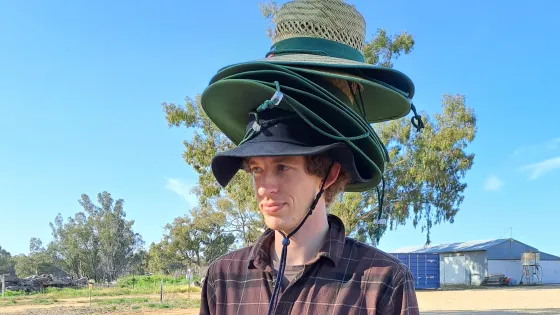
My PhD project aims to develop and apply novel screening methodologies to improve the identification and characterisation of heat-tolerant wheat genotypes.


Serendipita is a genus of beneficial root-associated fungi (Basidiomycota) that promotes plant growth, enhances nutrient acquisition, and improves plant resilience to environmental stresses.

This seminar examines evidence for prehistoric marsupial translocations across Wallacea and Near Oceania, focusing on species such as cuscus, wallabies, and bandicoots.

This talk provides an overview of the program’s national-scale approach, including standardised biodiversity monitoring, targeted research to resolve key knowledge gaps, and science-guided reintroductions across a network of AWC properties and partnership areas.

Velvet ants (mutillids) are a diverse and charismatic family of parasitoid wasps, characterised by extreme sexual dimorphism and a striking array of anti-predator adaptations.

This thesis examines the effect of climate change on a high-elevation ecosystem of Australia. It is expected that increases in temperature and changes in rainfall patterns will strongly influence both plant communities and the soil environments that support them.

Toxoplasma gondii belongs to the apicomplexan phylum, a group of medically and economically important parasites worldwide. T. gondii causes toxoplasmosis which can result in severe disease in immunocompromised people, neonates, and livestock.

I will talk about how deep geological and climatic history has shaped the genetic architecture of Australian fauna, with a focus on two contrasting systems: the arid zone and the Australian alps.