

Ecology and Evolution Seminar Series
Body
Seminars from the RSB Division of Ecology and Evolution (E&E).
Upcoming events

Phenotypic plasticity is an important adaptation for organisms that live under fluctuating environmental conditions.

The molecular clock hypothesis proposes that evolutionary change occurs as a temporally regular process, occurring at a rate that might fluctuate through time, but still remains more-or-less consistent.
Past events
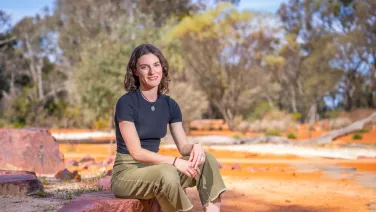
In this presentation, I show that geographically widespread triploid parthenogenetic forms of the Australian gekkonid Heteronotia binoei are considerably diverse despite their clonal reproductive mode, with patterns of SNP variation consistent with two previously identified reciprocal hybrid origins and numerous backcrossing events.
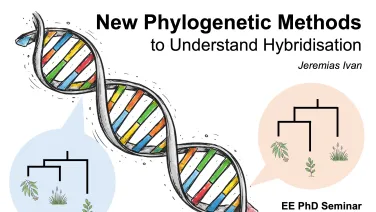
Hybridisation events – together with other biological processes such as recombination and incomplete lineage sorting – can create gene tree discordance, where different genomic regions describe different evolutionary histories.

The repeated, independent evolution of similar traits in different species is a fascinating phenomenon that affords deep insights into the relative importance of deterministic vs. stochastic forces in evolution.

In this talk, I introduce how white-winged choughs, highly social cooperative breeders, integrate multiple features of alarm and contact communication to coordinate antipredator behaviour and maintain cohesion.
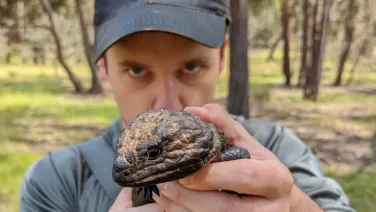
Developmental conditions are powerful drivers of phenotypic plasticity. Environmental factors, such as temperature, can directly program fitness-associated phenotypes, while maternal effects act as indirect cues that shape the developmental environment.
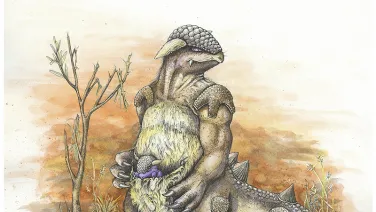
Species distribution models (SDMs) are widely used across fields as diverse as ecology, archaeology, epidemiology, and conservation biology.
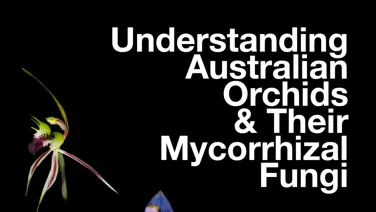
The majority of studies into the Australian orchid flora and associated funga have thus far been narrow in scope and focused either on a macro- or microevolutionary scale. In this thesis, I studied the Australian terrestrial orchid flora and its associated funga as a unified system spanning from the macro to microevolutionary scale.

Plants synthesize an amazing diversity of volatile organic compounds (VOCs) that facilitate interactions with their environment, ranging from attracting pollinators and seed dispersers to protecting themselves from pathogens, parasites, and herbivores.

This seminar is presented by Dr Emily Stringer and Dr Jarrod Sopniewski, Postdoctoral Research Fellows from the Centre for Conservation Ecology and Genomics at the University of Canberra.

Many flowering plants have evolved diverse strategies to communicate with and attract animal pollinators. We have discovered exciting new evidence for the role of anthocyanins and terpenes in the evolution of the highly diverse terrestrial orchid subtribe Caladeniinae (Diurideae).

Using case studies from my research on black-cockatoos and a formal partnership with Bush Heritage Australia, I will discuss how bioacoustics’ focus on machine learning and analysis over the last decade has now landed us in a place to use the technology in applied conservation settings.

Dietary shifts—particularly the inclusion of animal resources—were pivotal in human evolution, yet direct evidence of meat consumption in early hominins remains limited and debated.