
E&E PhD Exit Seminar: Genetic and epigenetic diversity in Heteronotia binoei parthenogens
In this presentation, I show that geographically widespread triploid parthenogenetic forms of the Australian gekkonid Heteronotia binoei are considerably diverse despite their clonal reproductive mode, with patterns of SNP variation consistent with two previously identified reciprocal hybrid origins and numerous backcrossing events.
Speakers
Event series

Content navigation
Description
ABSTRACT
Parthenogenesis, or all-female clonal reproduction, is rare among vertebrates. This is often attributed to the selective disadvantages of assumed reduction of genetic diversity in the absence of sex. However, parthenogenetic vertebrates have highly complex evolutionary histories and genomes, with most arising through hybridisation and many being polyploid. Additionally, adaptive potential may exist via epigenetic-mediated phenotypic plasticity within and between generations. This genetic and epigenetic variation may underpin the survival of rare parthenogenetic vertebrate species – including the notably widespread Australian gekkonid Heteronotia binoei. In this presentation, I show that geographically widespread triploid parthenogenetic forms of the Australian gekkonid Heteronotia binoei are considerably diverse despite their clonal reproductive mode, with patterns of SNP variation consistent with two previously identified reciprocal hybrid origins and numerous backcrossing events. I also show that chromatin profiles of hybrid parthenogenetic forms are distinct from those of a sympatric sexual progenitor, and that they vary greatly by geography. Together, these findings suggest both a genetic and epigenetic contribution to asexual evolution, with historical sex and environmentally linked gene regulatory changes potential avenues towards long-term persistence of these remarkable all-female lineages.
BIOGRAPHY
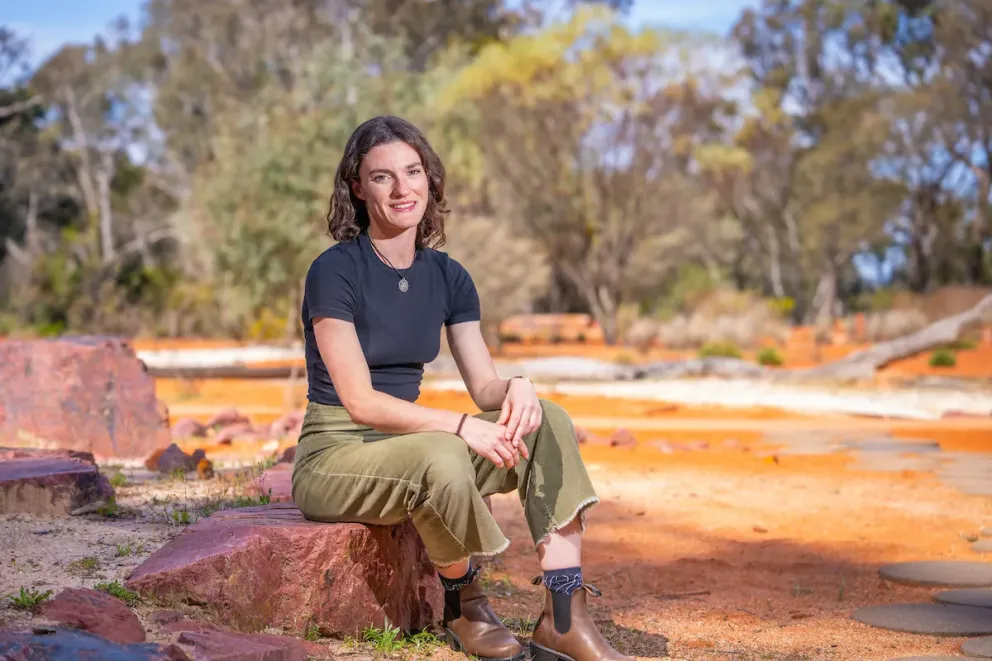
Kate O’Hara is currently a PhD candidate and MChD student at the Australian National University. She commenced her PhD in 2022 under the supervision of Craig Moritz (ANU), Clare Holleley (CSIRO), Erin Hahn (CSIRO), and Stephen Zozaya (ANU). She previously completed a Bachelor of Science and Diploma of Languages at The University of Melbourne before moving to Cairns to complete a CSIRO Summer Scholar internship in 2018. She moved to Canberra to complete her Honours under the supervision of Craig Moritz in 2020. Her research has ranged from orchid phylogenetics to population genetics, and more recently, investigation of genome-wide patterns in historical chromatin.
Location
Please note: this seminar will be held in the Eucalyptus Seminar Room and via Zoom, details are included below.
Eucalyptus Seminar Room, S205,
Level 2, RN Robertson Bldg (46)
Please click the link below to join the webinar:
https://anu.zoom.us/j/85454219162?pwd=8bJz9Sib9uNq96rGCMdI64RbUWlsBr.1
Webinar ID: 854 5421 9162
Passcode: 004576
Canberra time: please check your local time & date if you are watching from elsewhere.
Upcoming events in this series

The genotype-to-phenotype architecture (GPA), defined by complex interactions such as pleiotropy, epistasis, and regulatory control together with all the plasticity associated to these processes are fundamental yet often overlooked drivers of biodiversity dynamics.
This seminar is supported by the Centre for Biodiversity Analysis.