
Events
Participate in our seminars, public lectures and other events, or watch past event recordings.
Upcoming events

Climate change is quickly reshaping the environments in which wheat is cultivated, challenging global food security through increasing temperatures, heat stress, and unpredictable climatic variability.

I will talk about how deep geological and climatic history has shaped the genetic architecture of Australian fauna, with a focus on two contrasting systems: the arid zone and the Australian alps.

Toxoplasma gondii belongs to the apicomplexan phylum, a group of medically and economically important parasites worldwide. T. gondii causes toxoplasmosis which can result in severe disease in immunocompromised people, neonates, and livestock.

This thesis examines the effect of climate change on a high-elevation ecosystem of Australia. It is expected that increases in temperature and changes in rainfall patterns will strongly influence both plant communities and the soil environments that support them.
Past events
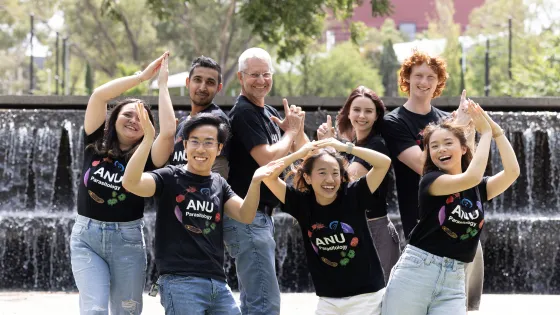
Malaria is a mosquito-borne infectious disease, with its most severe form caused by the protozoan parasite Plasmodium falciparum. The rapid emergence and spread of drug‑resistant parasites demand new therapeutic strategies.
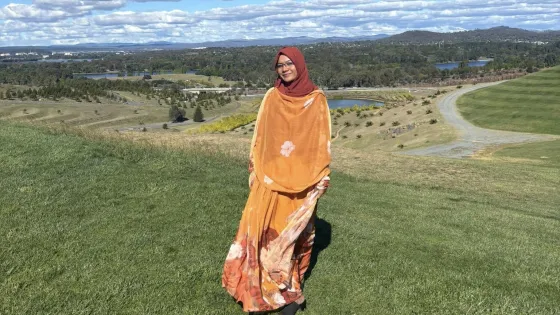
My research contributes to broader insights into sexual selection, life-history evolution, and the potential impacts of environmental change on reproductive dynamics in natural populations.

RSB Director's Seminar featuring Professor Jochen J. Brocks, Research School of Earth Sciences, ANU.

Plants employ a suite of gene regulatory mechanisms that enable them to occupy a diverse range of environments and respond to ongoing perturbations.

My PhD work defines the sources and mechanisms of cholesterol uptake in P. falciparum-infected RBCs and demonstrates how this pathway can be exploited to improve antimalarial drug delivery and therapeutic index.

Multilevel societies—where social groups show intergroup tolerance and repeatedly associate and merge with specific other groups—are among the most complex forms of social systems in vertebrates.