
PS Seminar Series - Chloroplast Calcium Dynamics: Linking Photosynthesis and Stress Responses under High Light
Chloroplasts can sense environmental fluctuations via Ca2+ signaling. Environmental triggers, such as light changes, physical damage and heat waves, can induce distinct Ca2+ signatures in chloroplasts, which may help rebalance photosynthesis and stress responses under fluctuating conditions.
Speakers
Event series
Content navigation
Description
Abstract - Chloroplasts can sense environmental fluctuations via Ca2+ signaling. Environmental triggers, such as light changes, physical damage and heat waves, can induce distinct Ca2+ signatures in chloroplasts, which may help rebalance photosynthesis and stress responses under fluctuating conditions.
Previously, we investigated Ca2+ responses to high light (HL) exposure in Arabidopsis thaliana, a biphasic increase of Ca2+ concentration was detected in the chloroplast stroma by the genetically encoded calcium indicator YC3.6 and confirmed using a newly established stroma-localized R-GECO1 (NTRC-R-GECO1). Chemical inhibition of photosynthetic electron transport, microscopy-based Fv/Fm experiments, and measurement of the reactive oxygen species (ROS)-redox balance with roGFP-based reporters and Singlet Oxygen Sensor Green (SOSG) chemical dye suggested that photodamage contributes to the stromal Ca2+ response. Pharmacological inhibition with cyclopiazonic acid (CPA) suggested that the HL response depends on a Ca2+ exchange between the endoplasmic reticulum (ER) and chloroplast stroma. This study implicates a novel Ca2+-mediated acclimation mechanism to HL stress.
We have now established an artificial-microRNA-based screening system to identify the channels and transporters regulating chloroplast Ca2+ responses. Through this approach, we hope to modulate the chloroplast Ca2+ dynamics and elucidate its role in photosynthesis and stress responses, potentially improving photosynthesis efficiency in the context of climate change.
Reference - Kuang, D. Romand, S. et al. The burning glass effect of water droplets triggers a high light-induced calcium response in the chloroplast stroma. Current biology (2025)
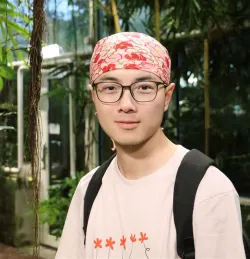
Biography - Biography - Dominic Kuang obtained his Bachelor’s degree in Horticulture from China Agricultural University in 2019. He then worked as a research assistant at the Institute of Botany, Chinese Academy of Sciences, where he developed an interest in photosynthesis and calcium signaling. He continued his Master’s studies in Plant Sciences at Wageningen University & Research in the Netherlands, and completed his Master’s thesis on stomatal movements under the supervision of Dr. Elias Kaiser in 2021. Since April 2023, Dominic has been a PhD student in the Stael lab at the Swedish University of Agricultural Sciences. His research focuses on plant acclimation to high light intensity, investigating the potential roles of chloroplast calcium signaling.
Location
Eucalyptus Seminar Room
S205, Level 2
RN Robertson Building (46)
Please click the link below to join the webinar:
https://anu.zoom.us/j/81627223683?pwd=CpLEh0oODCrb1deZUoZahWUCeDCaYA.1
Webinar ID - 816 2722 3683
Passcode - 181513