
PS Seminar Series: Immune suppression of virus vertical transmission in plants
Shou-Wei Ding is a Distinguished Fellow in the School of Life Sciences at the Peking University and a Distinguished Professor Emeritus in the Department of Microbiology and Plant Pathology at the University of California, Riverside.
Speakers
Event series
Content navigation
Description
BIOGRAPHY

Shou-Wei Ding is a Distinguished Fellow in the School of Life Sciences at the Peking University and a Distinguished Professor Emeritus in the Department of Microbiology and Plant Pathology at the University of California, Riverside. He received his Ph.D. from the Australian National University and held a faculty position in Singapore before joining UCR in 2000 and Peking University in 2026. Research in his lab has contributed to the discovery of RNA interference (RNAi) as a novel antiviral immunity mechanism in plants, invertebrates, and vertebrates. He is an elected Fellow of the American Academy of Microbiology and the American Association for the Advancement of Science (AAAS). He currently serves on the editorial boards of PLoS Pathogens and mBio.
Location
Please note: this seminar will be held in the Eucalyptus Seminar Room and via Zoom, details are included below.
Eucalyptus Seminar Room, S205,
Level 2, RN Robertson Bldg (46)
Please click the link below to join the webinar:
https://anu.zoom.us/j/84939686624?pwd=gCOlaEjV8s1r3tlNTB5OA8xpcYltVg.1
Webinar ID: 849 3968 6624
Passcode: 454253
Canberra time: please check your local time & date if you are watching from elsewhere.
Upcoming events in this series
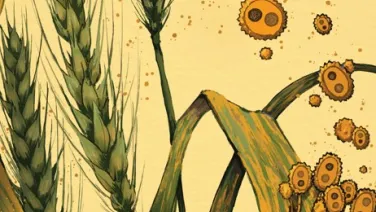
Rust fungi are among the most important groups of plant pathogens, causing substantial losses in agriculture and forestry. Wheat stripe rust, caused by Puccinia striiformis f. sp. tritici (Pst), is a major threat to global wheat production. Its pandemic asexual stage is associated with a dikaryotic genome organisation, in which two distinct haploid nuclei coexist within the same cell. How this unusual genome organisation contributes to its extraordinary capacity for rapid virulence evolution has been challenging to investigate, yet recent advances in long-read sequencing and comparative genomics have enabled these genomes to be studied at detailed nuclear resolution.