
PS Seminar Series (LEAPS Edition) - ANU Plant Science in 2018 - where to next?
Speakers
Event series
Content navigation
Description

Abstract - coming soon
Biography - Owen Atkin obtained his BSc (Hons) in 1987 (ANU) and his PhD in 1993 (Toronto). From 1993-1995 he held an EU Post Doctoral Fellowship (Utrecht). From 1996-1999 he held an ARC Post Doctoral Fellowship at ANU. Thereafter, he moved to UK to take up a faculty position in the Biology Dept at the University of York (1999-2008). He then returned to ANU in 2008 and held an ARC Future Fellowship from 2009 to 2013. Since 2014, his work has been supported by funding by the ARC Centre of Excellence in Plant Energy Biology, and by a grant from the International Wheat Yield Program. He is the Environment Section Editor for New Phytologist and is the current Head of the Division of Plant Sciences in RSB. A major focus of his research is assessing the impact of environmental gradients on plant physiological processes, particularly respiration.
Location
Slatyer Seminar Room, Level 2, RN Robertson Building (46), ANU
Upcoming events in this series

Shou-Wei Ding is a Distinguished Fellow in the School of Life Sciences at the Peking University and a Distinguished Professor Emeritus in the Department of Microbiology and Plant Pathology at the University of California, Riverside.
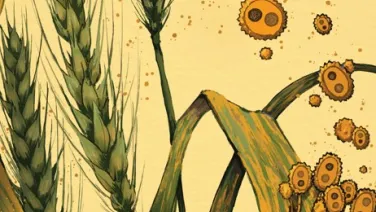
Rust fungi are among the most important groups of plant pathogens, causing substantial losses in agriculture and forestry. Wheat stripe rust, caused by Puccinia striiformis f. sp. tritici (Pst), is a major threat to global wheat production. Its pandemic asexual stage is associated with a dikaryotic genome organisation, in which two distinct haploid nuclei coexist within the same cell. How this unusual genome organisation contributes to its extraordinary capacity for rapid virulence evolution has been challenging to investigate, yet recent advances in long-read sequencing and comparative genomics have enabled these genomes to be studied at detailed nuclear resolution.