
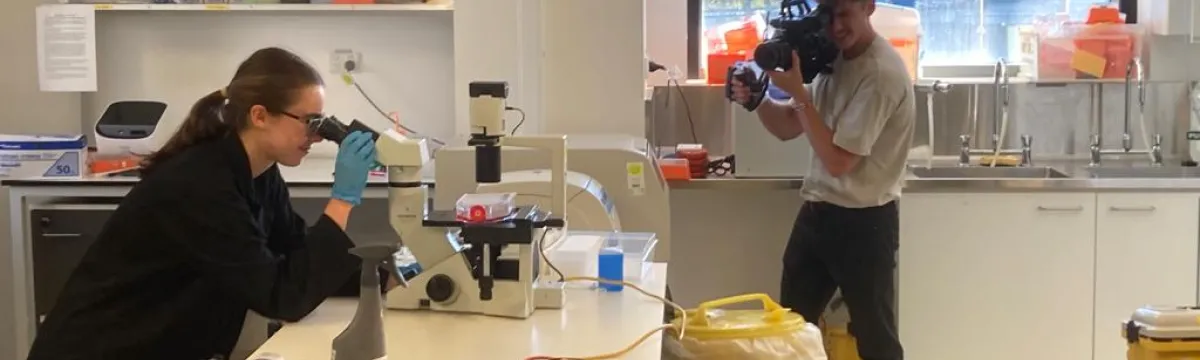
BSB PhD Exit Seminar: Exploring redundancies and dependencies in central carbon metabolism in Toxoplasma parasites
Toxoplasma gondii belongs to the apicomplexan phylum, a group of medically and economically important parasites worldwide. T. gondii causes toxoplasmosis which can result in severe disease in immunocompromised people, neonates, and livestock.
Speakers
Event series

Content navigation
Description
ABSTRACT
Toxoplasma gondii belongs to the apicomplexan phylum, a group of medically and economically important parasites worldwide. T. gondii causes toxoplasmosis which can result in severe disease in immunocompromised people, neonates, and livestock. This ubiquitous parasite exhibits a remarkable host cell range, infecting essentially any nucleated cell of any warm-blooded animal. T. gondii uses glucose and glutamine as carbon sources in central carbon metabolism pathways to enable the synthesis of energy and macromolecules critical for its survival and proliferation within its host. The mitochondrial tricarboxylic acid (TCA) cycle is a major pathway of central carbon metabolism. Previous research has shown that a complete and functional TCA cycle exists in T. gondii. However, the individual enzymatic reactions have not been studied in detail and the overall importance and contributions of the TCA cycle to central carbon metabolism required further exploration in T. gondii. In my PhD project, I utilized both forward and reverse genetics as well as physiological and metabolomic analyses to investigate the role and importance of the TCA cycle and its connection with overall central carbon metabolism in T. gondii. In my seminar, I will describe my findings, which revealed surprising differences in the importance of different TCA cycle enzymes for parasite survival, and identify unexpected metabolic redundancies and dependencies between the TCA cycle and other metabolic pathways in the parasite. Together, my findings have improved the understanding of a key metabolic pathway and the interlinked and flexible nature of central carbon metabolism in T. gondii. This metabolic flexibility is likely to contribute to the incredibly broad host and host cell range of T. gondii.
Location
Please note: this seminar will be held in the Eucalyptus Seminar Room and via Zoom, details are included below.
Eucalyptus Seminar Room, S205,
Level 2, RN Robertson Bldg (46)
Please click the link below to join the webinar:
https://anu.zoom.us/j/89635795134?pwd=u10FOgryzQ1Gs37PxNTUrnOgGUVMAa.1
Webinar ID: 896 3579 5134
Passcode: 794052
Canberra time: please check your local time & date if you are watching from elsewhere.