
What is condition? (And who cares?)
Speakers
Event series
Content navigation
Description
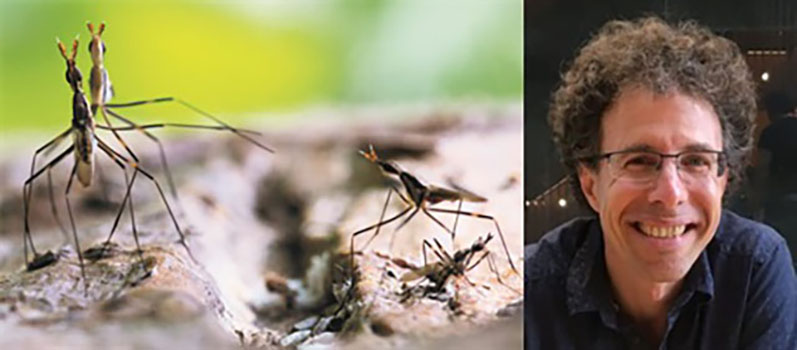
Condition has been a central concept in evolutionary ecology for decades, but recent discoveries challenge our understanding of the nature of condition and condition-dependent trait expression. First, it has often been assumed that high condition enhances the expression of all fitness-related traits, and can obscure trade-offs among such traits. However, recent evidence suggests that high condition can impose strong trade-offs, particularly through accelerated ageing. Second, classic theory posits that condition-dependent traits, while exquisitely sensitive to environment, can nonetheless serve as honest signals of genetic quality. However, recent studies that have directly compared the effects of genetic and environmental quality have found that the signal of genetic quality is often weak and inconsistent relative to the signal of environmental quality. These findings have interesting implications. For example, standard models suggest that purely environmental variation in condition could not drive the evolution of costly mate choice in systems where direct benefits of choice are lacking. Yet, recent theory and empirical evidence suggest that such traits could nonetheless serve as honest indicators of heritable quality via nongenetic parental effects. Moreover, purely environmental variation in condition could underpin variation in key life history traits such as ageing. Thus, while the nature of condition may require re-thinking, condition is likely to remain a key concept in evolutionary ecology.
Biography
Russell Bonduriansky completed his PhD at the University of Toronto, and is now a professor in the Evolution & Ecology Research Centre at UNSW. His research interests include sexual coevolution, developmental plasticity, nongenetic mechanisms of inheritance, and the evolution of ageing.
Location
Eucalyptus Seminar Room (S2.05), Level 2, RN Robertson Building (46), ANU
Upcoming events in this series

The most popular reproductive strategy across vertebrates is sexual reproduction, with two sexes that produce different, but complementary, gamete types (‘gonochorism’). In this seminar, I will focus on my work looking at sex-specific mitochondrial function.

Bagworms or case moths are charismatic but poorly known insects that are renowned for the intricate shelters constructed by their caterpillars. Hundreds of undescribed species are known from Australia, and the systematics of the most speciose subfamily, the Oiketicinae, are poorly resolved. A focus of my PhD research has been to construct the first comprehensive molecular phylogeny of this subfamily, including all major lineages.

Behavioural flexibility, the ability to adjust behaviour to new or changing conditions through learning, varies widely among taxa and may help animals cope with anthropogenic challenges. A century of research links this variation to brain size, life history, and social and ecological factors, yet how these affect each other, directly and indirectly, remains debated