
PS Seminar Series: Programmable TALE-based DNA binding domains and their biotechnological application
Transcription activator-like effectors (TALEs) are Type-III-effector proteins mainly found in phytopathogenic Xanthomonas species.
Speakers
Event series

Content navigation
Description
Abstract: Transcription activator-like effectors (TALEs) are Type-III-effector proteins mainly found in phytopathogenic Xanthomonas species. TALEs are secreted and translocated into the host cell, where they specifically bind DNA and manipulate transcription to promote virulence. The modular TALE DNA binding domain consists of conserved 34-35 amino acid repeats differing mainly in two key positions called Repeat-variable diresidues (RVDs). Specific DNA-binding occurs in a “one repeat to one base pair” recognition mode, whereas the RVD defines the base binding specificity of a given repeat. De novo assembly of user-defined repeat arrays allows the design of artificial sequence specific TALE DNA binding domains, which can be applied beyond site-specific transcriptional activation by its fusion to different executer domains. In this seminar, natural TALE functions, molecular mechanisms of specific TALE-DNA binding and their biotechnological applications will be presented.
Biography: Dr. Tom Schreiber is a post-doctoral fellow in the field of synthetic biology at Leibniz Institute of Plant Biochemistry. He has background in microbiology, plant physiology, genetics and biochemistry. He received his PhD in Plant Genetics in 2015 working on the analysis of the specific TALE-DNA interaction under Prof. Dr. Ulla Bonas at Martin Luther University Halle-Wittenberg. During his undergraduate studies, he worked on the molecular characterization of AvrBs3-homologs in Ralstonia solanacerum under Prof. Dr. Thomas Lahaye.
Location
Please note: this seminar will be held via Zoom, details are included below.
Please click the link below to join the webinar:
https://anu.zoom.us/j/83810860752?pwd=YUVVN01GcTJrS1B2Nm5oYmhLdHVVdz09
Meeting ID: 838 1086 0752 Passcode: 315361
Canberra time: please check your local time & date if you are watching from elsewhere.
Upcoming events in this series
Shou-Wei Ding is a Distinguished Fellow in the School of Life Sciences at the Peking University and a Distinguished Professor Emeritus in the Department of Microbiology and Plant Pathology at the University of California, Riverside.
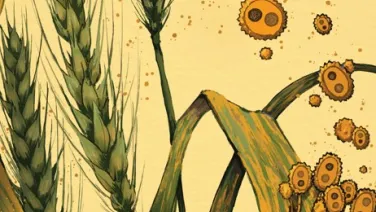
Rust fungi are among the most important groups of plant pathogens, causing substantial losses in agriculture and forestry. Wheat stripe rust, caused by Puccinia striiformis f. sp. tritici (Pst), is a major threat to global wheat production. Its pandemic asexual stage is associated with a dikaryotic genome organisation, in which two distinct haploid nuclei coexist within the same cell. How this unusual genome organisation contributes to its extraordinary capacity for rapid virulence evolution has been challenging to investigate, yet recent advances in long-read sequencing and comparative genomics have enabled these genomes to be studied at detailed nuclear resolution.