
PS Seminar Series- PhD Exit Seminar- The flax-rust AvrP protein appears to be a bifunctional effector targeting both glucose and RNA metabolism in flax
Rust diseases are a serious threat to cereals and other crops worldwide. The interaction between flax and the flax rust fungus, Melampsora lini, is a model pathosystem helping us to understand the molecular basis of rust fungal pathogenicity in plants.
Speakers
Event series
Content navigation
Description

Abstract - Rust diseases are a serious threat to cereals and other crops worldwide. The interaction between flax and the flax rust fungus, Melampsora lini, is a model pathosystem helping us to understand the molecular basis of rust fungal pathogenicity in plants. The AvrP effector protein is translocated into the plant cell by the pathogen to facilitate infection. To investigate the role of AvrP, plant interactors were identified via a yeast two hybrid (Y2H) screen and confirmed by in planta assays. AvrP was found to interact with flax phosphoglucomutase and DEAD Box RNA Helicase 56 (DRH56). Further Y2H analysis showed that AvrP targets the phosphate binding domain of phosphoglucomutase. In an in vitro enzymatic assay, purified AvrP protein was able to modulate phosphoglucomutase activity for increased glucose 6-phosphate production. Bimolecular fluorescence complementation analysis showed that AvrP and DRH56 interact inside plant nuclei and co-expression of AvrP and DRH56 in Nicotiana benthamiana leaves resulted in cell death. Mutational disruption of DRH56 ATPase activity did not abolish its interaction with AvrP nor their ability to induce cell death in N. benthamiana. RNA-seq analysis revealed that AvrP has a broad disruptive effect on the flax transcriptome. Overall, these results suggest that AvrP is a bifunctional effector able to affect both glucose and RNA metabolism by manipulation of flax phosphoglucomutase and DRH56, respectively.
Location
Eucalyptus Seminar Room, S205, Level 2, RN Robertson Building (46)
Upcoming events in this series

Shou-Wei Ding is a Distinguished Fellow in the School of Life Sciences at the Peking University and a Distinguished Professor Emeritus in the Department of Microbiology and Plant Pathology at the University of California, Riverside.
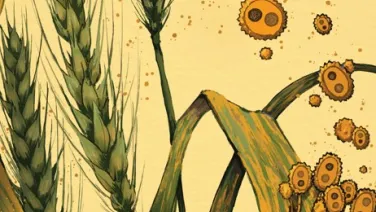
Rust fungi are among the most important groups of plant pathogens, causing substantial losses in agriculture and forestry. Wheat stripe rust, caused by Puccinia striiformis f. sp. tritici (Pst), is a major threat to global wheat production. Its pandemic asexual stage is associated with a dikaryotic genome organisation, in which two distinct haploid nuclei coexist within the same cell. How this unusual genome organisation contributes to its extraordinary capacity for rapid virulence evolution has been challenging to investigate, yet recent advances in long-read sequencing and comparative genomics have enabled these genomes to be studied at detailed nuclear resolution.