
PS Seminar Series: Organelles as sensors and mediators of plant cell acclimation to environmental stimuli
Plant energy organelles such as chloroplasts are central to the evolution and function of plants; indeed it can be argued that chloroplasts are the raison d’ȇtre for plants.
Speakers
Event series
Content navigation
Description
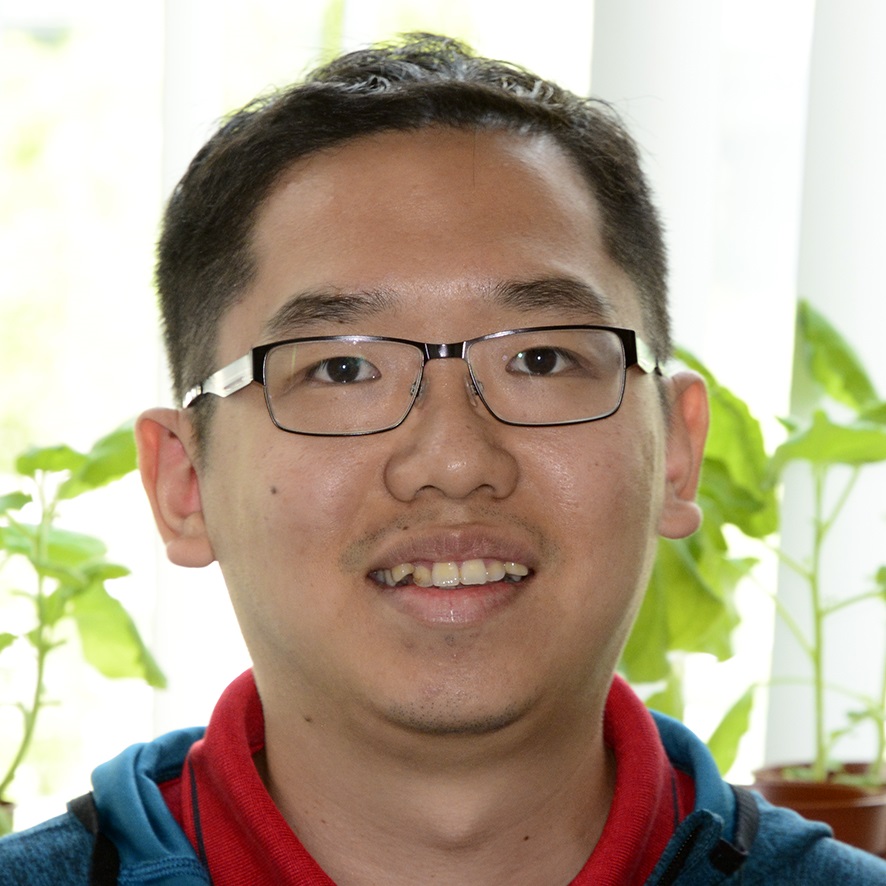
Abstract: Plant energy organelles such as chloroplasts are central to the evolution and function of plants; indeed it can be argued that chloroplasts are the raison d’ȇtre for plants. However, chloroplasts and mitochondria are more than just energy factories because they are also stress sensors and regulators of cellular acclimation to environmental challenges. In this talk, I will discuss my research in organellar signalling involving chloroplasts and mitochondria. I will highlight progress made in understanding structural-biochemical regulation of organelle signalling; the intersection between organelle signalling pathways and broader cellular processes; and efforts to develop new tools for more precise manipulation of organelle signalling. Finally, I will briefly outline my future ANU research programme to unravel the complex interplay between organelle signalling, metabolism and plant function.
Biography: Kai Xun Chan obtained a PhD in Plant Sciences from the Australian National University (ANU) in 2015; working on the biochemistry and structural biology of a chloroplast signalling enzyme. He then continued onto a postdoc position to study the intersection between chloroplast signalling and other plant processes such as stomatal closure and circadian regulation; as well as establishing a chemical biology screening platform to identify novel regulators of chloroplast signalling. During this time Kai won a JG Russell medal for best PhD thesis in Science and Engineering, as well as ACT Scientist of the Year and Young Tall Poppy awards for early career researchers. In 2018, Kai obtained Marie Skladowska-Curie and Research Foundation – Flanders (FWO) postdoctoral fellowships to move to the VIB Ghent Centre for Plant Systems Biology, Belgium. Here he has focused on crosstalk between chloroplast and mitochondrial signalling via alternative splicing in the nucleus, as well as cell-specialisation of oxidative stress signalling pathways. Kai will return to ANU in 2022 as an ARC DECRA fellow and independent group leader, where he will investigate organelle signalling in different fundamental plant processes such as cell-specialisation of C4 photosynthesis.
Location
Hi there,
You are invited to a Zoom webinar.
When: Jun 2, 2021 02:30 PM Canberra, Melbourne, Sydney
Topic: Dr Kai Chan webinar
Please click the link below to join the webinar:
https://anu.zoom.us/j/84507641426?pwd=Tm5GaDF5aXV0TU9OK241SW9WYjVpUT09
Webinar ID: 845 0764 1426
Passcode: 602579
Or One tap mobile :
Australia: +61871501149,,84507641426#,,,,*602579# or +61280156011,,84507641426#,,,,*602579#
Or Telephone:
Dial(for higher quality, dial a number based on your current location):
Australia: +61 8 7150 1149 or +61 2 8015 6011 or +61 3 7018 2005 or +61 7 3185 3730 or +61 8 6119 3900
International numbers available: https://anu.zoom.us/u/kcJktKtc1w
Upcoming events in this series

The Purple Tomato is a groundbreaking example of how biotechnology can translate scientific innovation into real-world impact. This talk traces the journey from fundamental plant science and the development of anthocyanin-rich tomatoes to regulatory approval (including Australia), commercialization, and consumer adoption.

For decades, photorespiration was regarded largely as a wasteful process that lowers photosynthetic efficiency. However, growing evidence points to an additional role in plant defence.

Water availability and quality strongly affect plant productivity, with drought and salinity disrupting water uptake and cellular homeostasis. Aquaporins (AQPs) are membrane proteins that facilitate the movement of water and small solutes across cellular membranes. However, the contributions that AQPs make to water-stress responses in wheat (Triticum aestivum) remain poorly understood, leaving a knowledge gap that my research seeks to address.