
PS Seminar: Leaps Edition: What comes first - the Pearly Gates or a "better" Rubisco?
Speakers
Event series
Content navigation
Description

The need to feed and fuel a growing global population has led to increased exploitation of synthetic biology tools (SynBio) to adjust metabolism, including photosynthesis, towards enhancing plant growth. Increasing the yield potential of crops will likely require a combination of metabolic changes – either sourced via mining natural diversity or obtained via artificial modification. Enhancing the CO2-fixing potential of the photosynthetic enzyme Rubisco has long been considered a fundamental target for improving the rate of carbon assimilation and growth of crops. In this presentation I will discuss the development of SynBio approaches that now equip us with capabilities to deliver solutions for improving Rubisco performance and some challenges that lay ahead for their translation into crops.
Location
Eucalyptus Seminar Room, Level 2, RN Robertson Building #46
followed by LEAPS edition bonus: drinks and nibbles
Upcoming events in this series

Shou-Wei Ding is a Distinguished Fellow in the School of Life Sciences at the Peking University and a Distinguished Professor Emeritus in the Department of Microbiology and Plant Pathology at the University of California, Riverside.
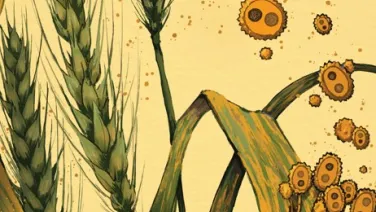
Rust fungi are among the most important groups of plant pathogens, causing substantial losses in agriculture and forestry. Wheat stripe rust, caused by Puccinia striiformis f. sp. tritici (Pst), is a major threat to global wheat production. Its pandemic asexual stage is associated with a dikaryotic genome organisation, in which two distinct haploid nuclei coexist within the same cell. How this unusual genome organisation contributes to its extraordinary capacity for rapid virulence evolution has been challenging to investigate, yet recent advances in long-read sequencing and comparative genomics have enabled these genomes to be studied at detailed nuclear resolution.