
E&E Webinar: Simpson’s Question: How does behaviour determine evolution?
For more than 50 years, the scientific study of animal behaviour has been defined by Tinbergen’s Four Questions. Two of his questions consider the connection between evolution and animal behaviour. They ask: how is behaviour is adaptive, and what is its evolutionary history?
Speakers
Event series
Content navigation
Description

For more than 50 years, the scientific study of animal behaviour has been defined by Tinbergen’s Four Questions. Two of his questions consider the connection between evolution and animal behaviour. They ask: how is behaviour is adaptive, and what is its evolutionary history?
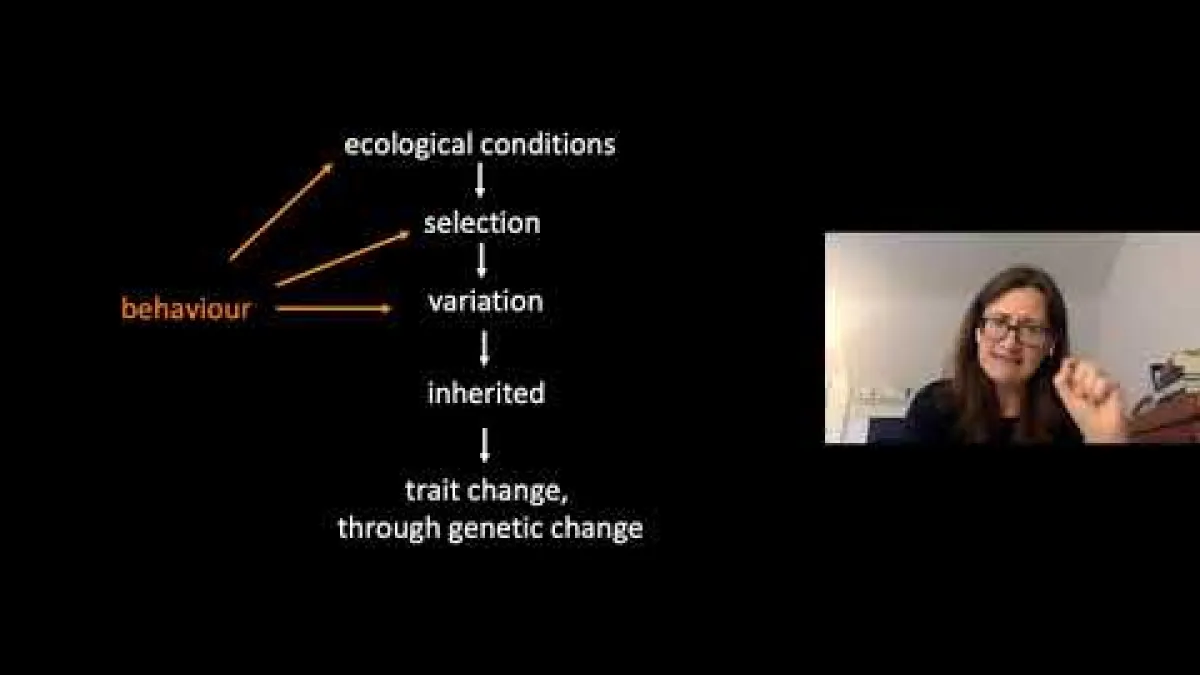
Five years before Tinbergen asked his Four Questions, G. G. Simpson posed a question of his own. Simpson was a palaeontologist and one of the architects of the Modern Synthesis. Simpson had successfully introduced the concepts of the Modern Synthesis into palaeontology and set his sights on achieving the same for animal behaviour. His question gets straight to the heart of the matter: How does behaviour evolve and how does it then determine subsequent evolution?
Yet Simpson’s question has been overshadowed by Tinbergen’s Four Questions, and largely forgotten. Far more work has considered how behaviour is adaptive than how behaviour contributes to evolution. In this talk, I will explain why the answers to Simpson’s Question matter now, and describe some experiments that explain exactly how behaviour can affect the course of evolution.
Our research focuses on the burying beetle (or sexton beetle), an insect that is abundant in European woodlands and that has a remarkable natural history. It is named for its habit of burying the dead, and tending the graveyard. It locates a small corpse to breed upon, such as a mouse or a songbird, shaves off the fur or feathers, rolls the flesh into a ball and then inters it in a shallow grave where it becomes an edible nest for its larvae. The parent beetles then tend to their young, by feeding them and defending them from attack. The natural history of these animals lends itself to experimental evolution, and lets us test directly how behaviour determines evolution.
Biography
Being typically modest, Rebecca described herself as follows: "Born, lived a bit, occasionally in Australia, did some stuff, now sufficiently old and fusty to be in a Museum, has two sons, one husband, no book written etc etc”. In truth, Professor Rebecca Kilner is a highly regarded evolutionary ecologist who has produced numerous important papers on brood parasitism in cuckoos and parental care in insects. She is currently the director of the Cambridge University Museum of Zoology. Among her numerous awards and achievements are being awarded the Zoological Society of London Scientific Medal and the Royal Society Wolfson Research Merit Award. This year she was made a Fellow of the Royal Society for her "discoveries in how social behaviour drives evolutionary change".
Location
Please click the link below to join the webinar:
https://anu.zoom.us/j/82141267029?pwd=SWVXckF4VVhFaW13OS8rd1I5d0U2Zz09
Passcode: 858012
Canberra time: please check your local time & date if you are watching from elsewhere.
Upcoming events in this series

Over the last three years of my PhD, I have been working with Anangu researching why ecologically and culturally significant plants are dying during extreme heatwaves and drought

Pollinators are essential to plant reproduction, community structure, and ecosystem health, but those inhabiting alpine environments face strong thermal constraints.
Over the course of my PhD, I have had the pleasure of working in Australia's sub-alpine grasslands investigating the effects of heat and drought on plant functioning and carbon cycling.