
E&E Special Seminar: Mechanisms of reef coral resistance to multiple climate change stressors
Speakers
Event series
Content navigation
Description
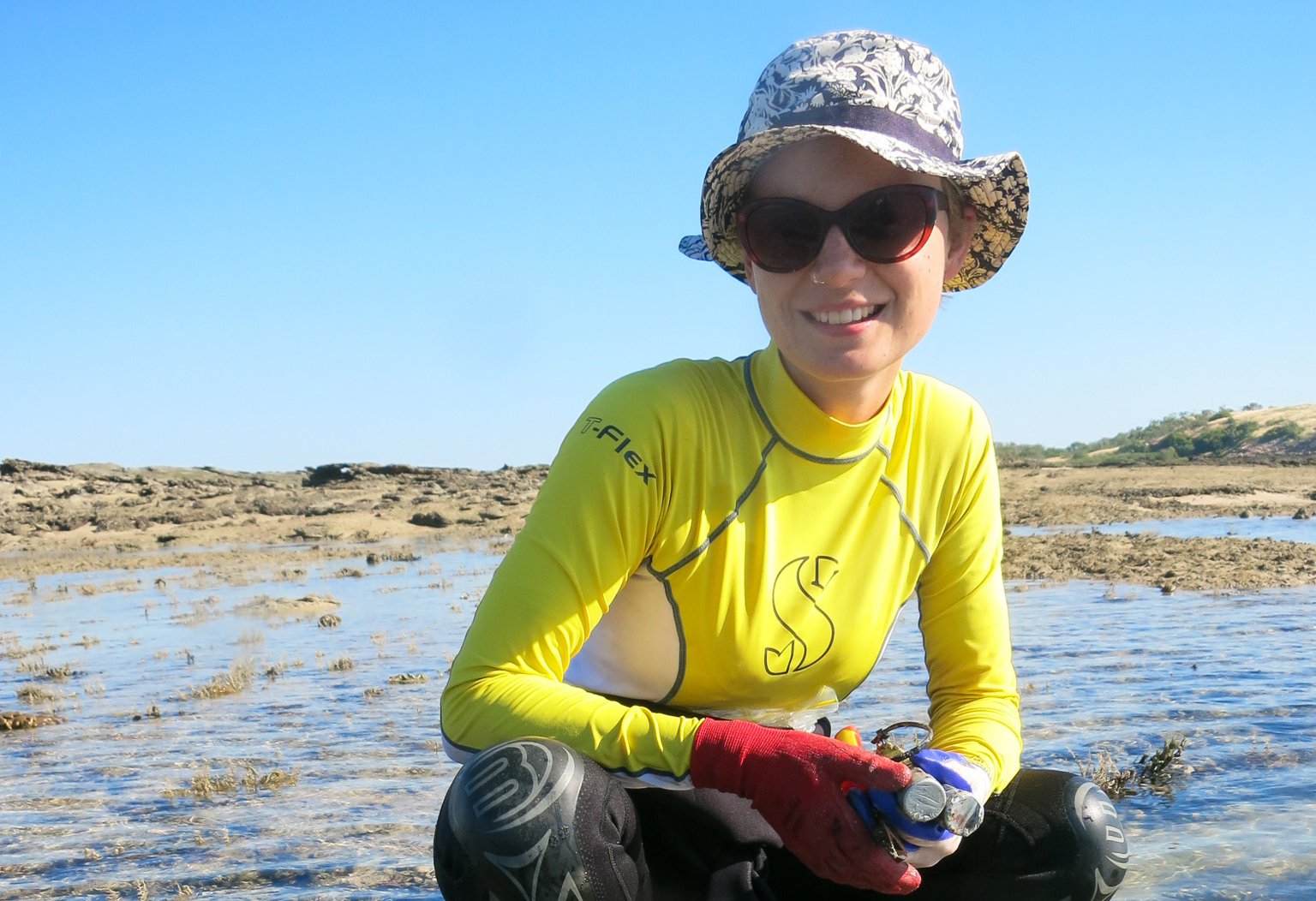
Coral reefs are in serious worldwide decline and increasingly threatened by rapid climate change, recurrent mass bleaching events and ocean acidification. One of the key questions is therefore if and how reef-building corals may be able to cope with these combined stressors and persist into the future. In this talk, I will show that naturally extreme reef environments such as the macrotidal Kimberley region in NW Australia are ideal natural laboratories to study the physiological mechanisms underlying coral resilience to heat stress and their capacity to acclimatize to climate change. Furthermore, I will present how Hawaiian corals living on reefs with naturally lower seawater pH can modify their calcification mechanisms to facilitate adaptive responses and resistance to ocean acidification.
Biography
Verena investigates how warming and acidifying oceans impact reef-building corals. She uses eco-physiological and biogeochemical tools to provide insights into the environmental drivers and biological traits that enable resistance to climate change stressors and promote the adaptive capacity of corals in a changing ocean. A Research Fellow at the University of Western Australia, she holds a PhD from The Ohio State University and both MS and BS degrees from the University of Innsbruck, Austria. She is also a Research Program Leader in the ARC Centre of Excellence for Coral Reef Studies. Verena is passionate about science communication and promoting women in STEM. She is a TEDx speaker, Superstar of STEM, and was recently awarded a WA Young Tall Poppy Science Award. Her career and research on Kimberley corals were featured in the 2016 documentary series “Ocean Heroines”.
Location
Eucalyptus Seminar Room, Rm S205, Level 2, RN Robertson Building (46)
Upcoming events in this series

The most popular reproductive strategy across vertebrates is sexual reproduction, with two sexes that produce different, but complementary, gamete types (‘gonochorism’). In this seminar, I will focus on my work looking at sex-specific mitochondrial function.

Bagworms or case moths are charismatic but poorly known insects that are renowned for the intricate shelters constructed by their caterpillars. Hundreds of undescribed species are known from Australia, and the systematics of the most speciose subfamily, the Oiketicinae, are poorly resolved. A focus of my PhD research has been to construct the first comprehensive molecular phylogeny of this subfamily, including all major lineages.

Behavioural flexibility, the ability to adjust behaviour to new or changing conditions through learning, varies widely among taxa and may help animals cope with anthropogenic challenges. A century of research links this variation to brain size, life history, and social and ecological factors, yet how these affect each other, directly and indirectly, remains debated