
PS Seminar Series: Host susceptibility factor MLO supports fungal pathogenesis and symbiosis
Dr Catherine Jacott
Speakers
Event series
Cost
Cost per person: 0.00
Content navigation
Description

Abstract - Understanding how plants balance the ability to both accommodate symbionts and resist pathogens has direct implications for fundamental plant biology and the optimal use of crop plants in agriculture.
Host susceptibility genes enable the colonization of plants by pathogens. However, the extent to which host susceptibility factors are involved beneficial symbioses is unknown. Mildew resistance locus o (MLO) is a host susceptibility factor, first identified in barley, conferring infection by a biotrophic fungus, powdery mildew (PM). In loss-of-function mlo mutants, fungal development is restricted at the host cell entry stage, and thus mlo mutants provide robust immunity.
Arbuscular mycorrhizal fungi (AMF) form favorable biotrophic symbioses with most land plants, including important crops. We show that, in addition to PM colonization, MLO is important for arbuscular mycorrhizal symbiosis, and this function is conserved across species: barley, wheat and Medicago truncatula.
The establishment of mycorrhization was delayed in barley and wheat PM-resistant mlo mutants. Barley Mlo (HvMLO) transcript levels are upregulated in response to both PM and AMF. Thus, induction during mycorrhization and phylogenetic analyses were used to predict which M. truncatula MLO (MtMLO) orthologs may be functionally analogous to HvMLO. Promoter-GUS assays show that MtMLO8 is induced in root cells containing arbuscules, and mutants in MtMLO8 also had delayed mycorrhization.
To explore the mechanism of MLO in fungal biotrophy, we performed RNA sequencing in barley wild-type and Hvmlo mutant—during mycorrhization and powdery mildew infection—to determine to what degree MLO controls analogous processes during symbiotic and pathogenic interactions.
Biography - I have recently completed my PhD at the John Innes Centre, UK. I did my undergraduate degree at the University of York. I am interested in how plants have evolved mechanisms to accommodate symbiotic microbes and how pathogens can exploit these pathways to facilitate their infection. My research has involved the host susceptibility factor MLO (Mildew locus O). I researched the role of MLO during fungal biotrophy: arbuscular mycorrhizal symbioses and powdery mildew infection.
Location
Eucalyptus Seminar Room, S205, Level 2, RN Robertson Building (46)
Upcoming events in this series

Shou-Wei Ding is a Distinguished Fellow in the School of Life Sciences at the Peking University and a Distinguished Professor Emeritus in the Department of Microbiology and Plant Pathology at the University of California, Riverside.
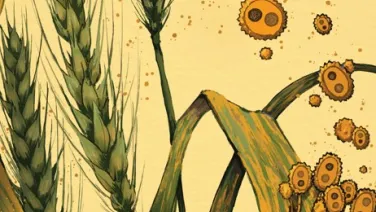
Rust fungi are among the most important groups of plant pathogens, causing substantial losses in agriculture and forestry. Wheat stripe rust, caused by Puccinia striiformis f. sp. tritici (Pst), is a major threat to global wheat production. Its pandemic asexual stage is associated with a dikaryotic genome organisation, in which two distinct haploid nuclei coexist within the same cell. How this unusual genome organisation contributes to its extraordinary capacity for rapid virulence evolution has been challenging to investigate, yet recent advances in long-read sequencing and comparative genomics have enabled these genomes to be studied at detailed nuclear resolution.